How to get to Capitol Reef Resort from the nearest airports
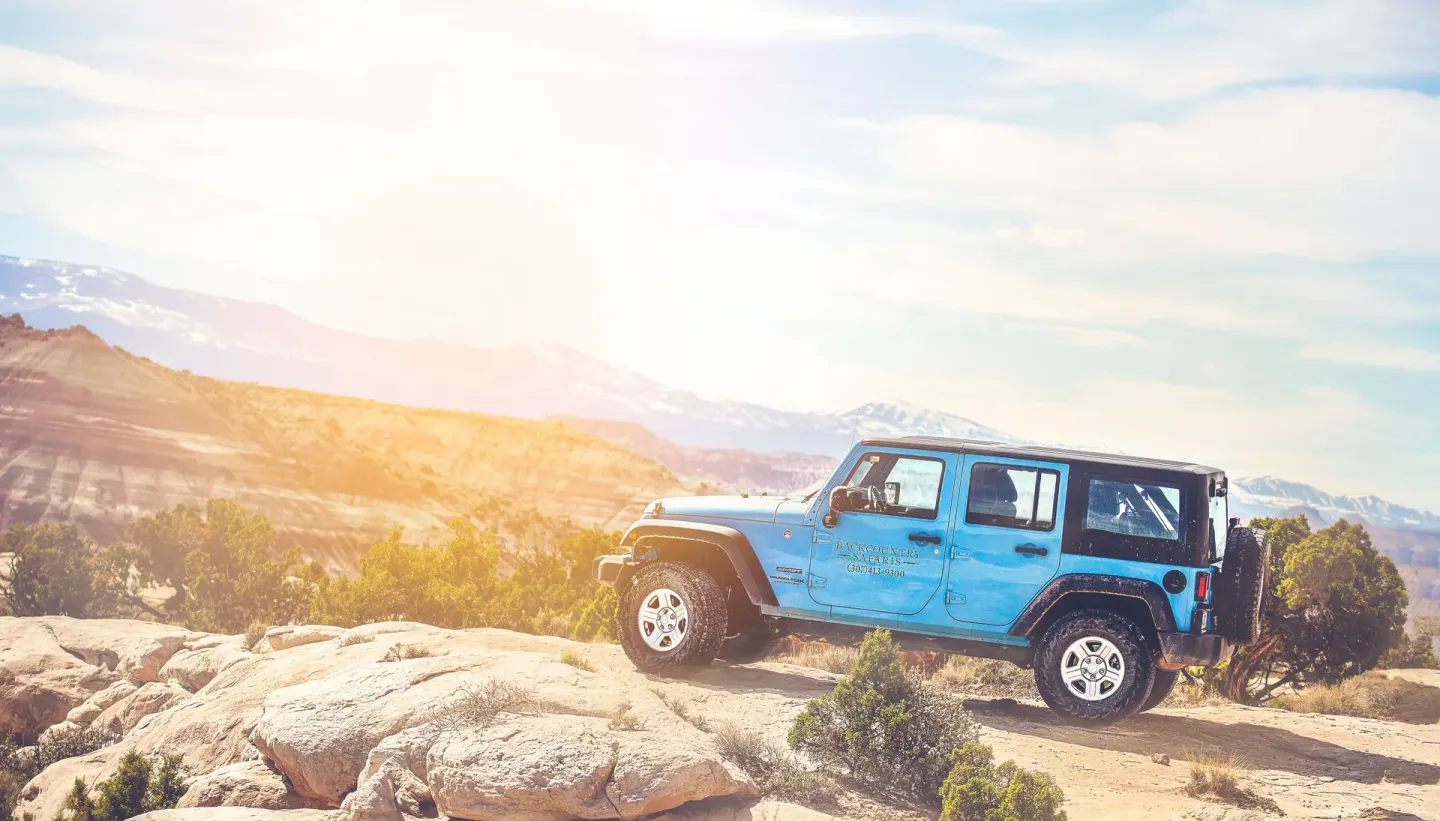
Capitol Reef Resort is best reached by car from the nearest commercial airports; the most commonly used airports are Grand Junction Regional Airport (GJT) and Salt Lake City International Airport (SLC), with Canyonlands Field (CNY) / Moab an intermediate option. There is no regular airport shuttle to Torrey, so rent a car at the airport or arrange a private transfer to drive to the resort at 2600 E. Hwy 24, Torrey, UT.
In this guide
Which airports travelers use
There is no single small airport in Torrey with regular commercial service; travelers typically fly into one of several regional or major airports and continue by road. Sources commonly cited are Grand Junction Regional Airport (GJT), Salt Lake City International Airport (SLC), and Canyonlands Field (CNY) in Moab.
Each airport has different flight options and drive times to Torrey; choose based on schedules, fares, and whether you prefer a longer scenic drive or a shorter flight connection.
- Grand Junction Regional Airport (GJT): listed as a commonly used nearby airport.
- Salt Lake City International Airport (SLC): larger hub with more flights; commonly used despite a longer drive.
- Canyonlands Field (CNY) / Moab: closer in miles to some park areas but has fewer commercial flights.
| Airport | Notes from sources |
|---|---|
| Grand Junction Regional (GJT) | Often listed as the closest major airport option used for Capitol Reef (source: Frommers). |
| Salt Lake City Intl. (SLC) | Major hub with many connections; commonly used though drive is longer (source: researched dossier). |
| Canyonlands Field (CNY) - Moab | Identified by some sources as a nearer option in miles but with limited flights. |
Drive times and mileage expectations
Published sources vary on exact miles and drive times. Grand Junction is often listed at roughly a 3-hour drive and Salt Lake City at about 3.5 hours; Moab/Canyonlands Field is sometimes cited as closer in miles but has fewer direct flights.
Road travel is the normal way into Torrey and to Capitol Reef Resort; plan for multi-hour drives from any airport and check current road conditions and closures before you depart.
- Grand Junction (GJT): commonly cited at about a 3-hour drive.
- Salt Lake City (SLC): commonly cited at about a 3.5-hour drive.
- Canyonlands/Moab (CNY): cited as nearer by mileage on some sources but limited flight options.
| From | Typical time cited |
|---|---|
| Grand Junction (GJT) | About 3 hours (reported by travel sources) |
| Salt Lake City (SLC) | About 3.5 hours (reported by travel sources) |
| Canyonlands / Moab (CNY) | Shorter in miles per some sources; flight options limited |
Car rental, private transfer, and local transport
Torrey is a small town and local rental-car availability is limited; many traveler reports and sources note that Torrey itself does not reliably offer car-rental counters or airport shuttles. For flexibility, arrange car rental at your arrival airport.
If you prefer not to drive, private shuttle or transfer companies operate between Salt Lake City and Torrey for an additional fee; availability varies and advance booking is recommended. No regular public transport or resort airport shuttle was found in the research.
- Rent a car at GJT, SLC, or CNY for the most reliable access to Torrey and Capitol Reef Resort.
- Expect to arrange any private transfer or SUV shuttle in advance if you do not rent a car.
- Check with Capitol Reef Resort concierge for recommendations or tour/shuttle partners — the property does not list an official airport shuttle.
| Option | Recommendation |
|---|---|
| Airport car rental | Recommended for independence and sightseeing flexibility |
| Private SUV shuttle | Book in advance for direct service from SLC to Torrey |
| Public transport | Not a practical option — schedules and availability are limited |
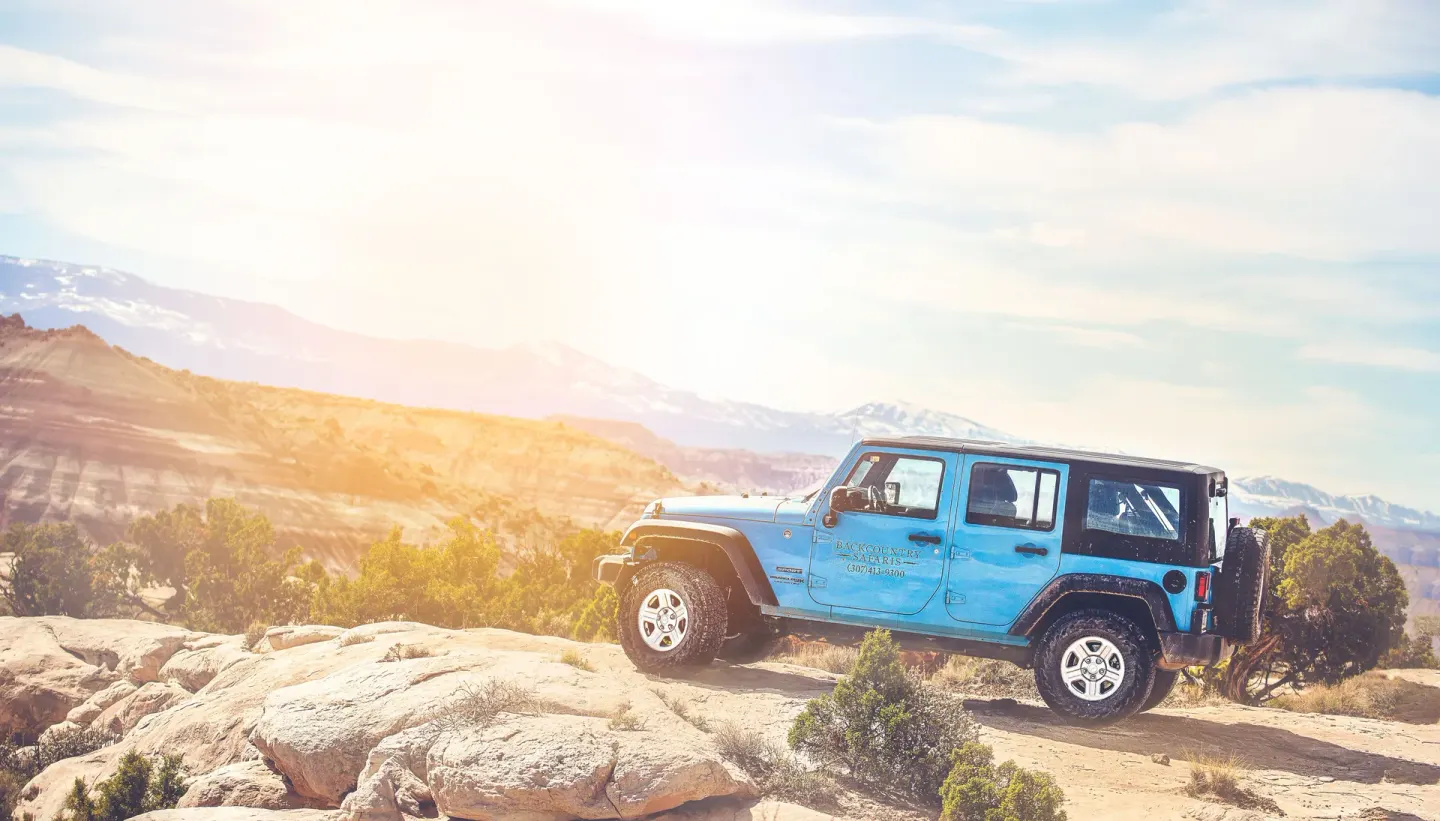
Driving directions to Capitol Reef Resort (practical notes)
The resort street address is 2600 E. Hwy 24, Torrey, UT 84775. Most visitors will reach Torrey via Highway 24. Use a current GPS app or printed directions from your airport city; cell coverage can be patchy in parts of southern Utah.
There are few services on the final stretches into Torrey, so fill fuel and water before leaving larger towns. Check weather and road condition reports during winter or summer monsoon season, when flash flooding can affect some routes.
- Enter the resort address (2600 E. Hwy 24, Torrey) into your GPS for turn-by-turn navigation.
- Bring a paper map or have downloaded offline maps in case of weak cell service.
- Refuel in larger towns (e.g., Richfield, Torrey area services are limited) before final approach.
| Tip | Why it helps |
|---|---|
| Download offline maps | Cell coverage can be limited near remote park roads |
| Check weather alerts | Monsoon season can cause flash floods in summer |
| Plan fuel stops | Few fuel stations are available near Torrey |
Getting from the highway to your room
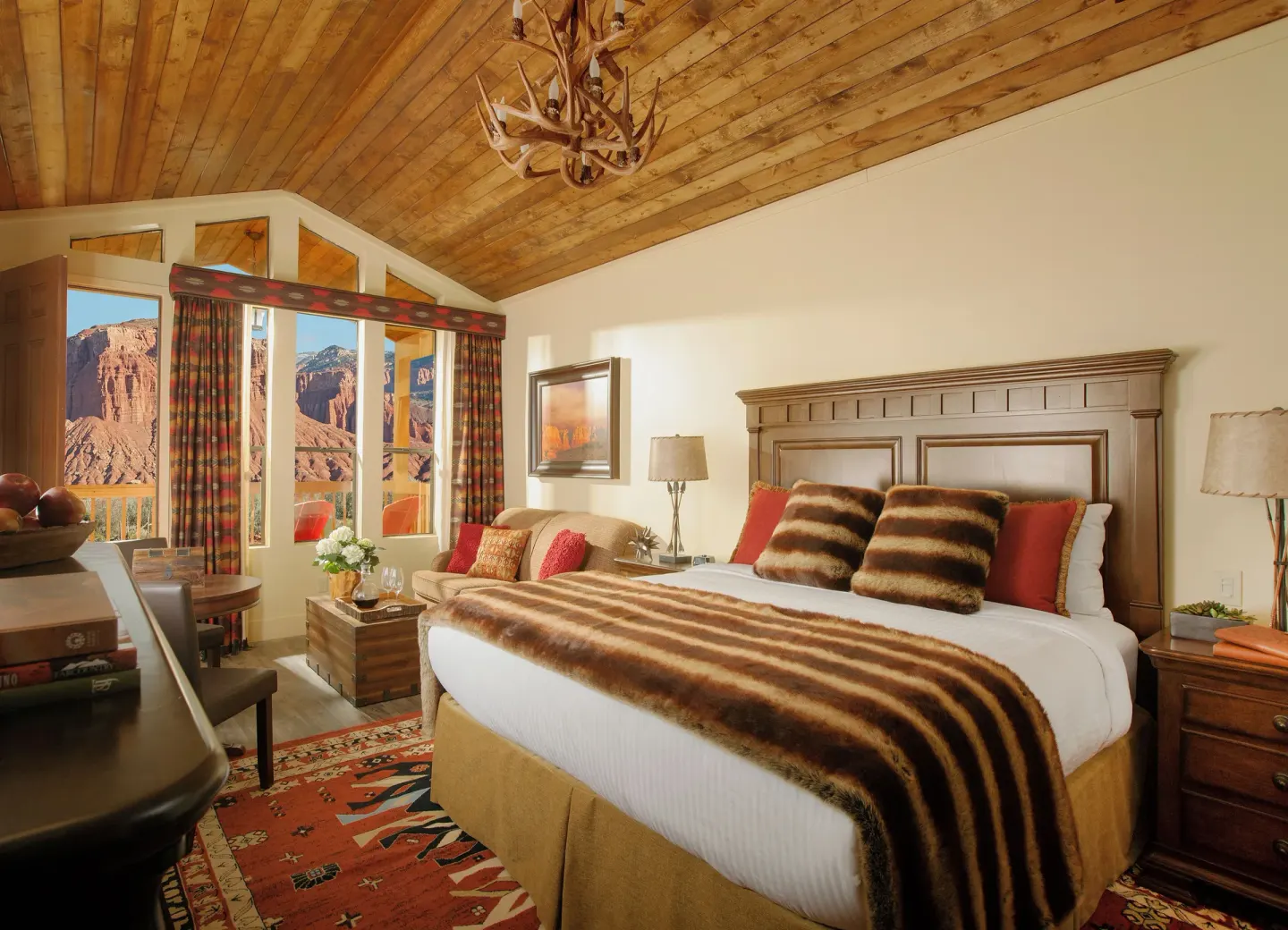
Capitol Reef Resort offers free self-parking on site for standard vehicles, RVs, buses, and trucks. Park near the main lodge area and check in at the front desk; the address above will put you at the resort entrance on Hwy 24.
At check-in you’ll be given resort-specific information. Note that check-in at Capitol Reef Resort begins at 4:00 PM and the front desk adheres to that time. The resort accepts credit cards (cashless) and requires a government-issued photo ID at check-in.
- Resort phone for BookResorts agents (24/7): +1 (888) 605-1350 — call if you need arrival assistance.
- Check-in begins at 4:00 PM; front desk policies are strictly enforced.
- Guests receive free Wi‑Fi and can park on site at no charge.
| At arrival | What to expect |
|---|---|
| Front desk hours | Standard desk; research notes some sources listing a 9pm close — call ahead if arriving late |
| Payment and ID | Government-issued photo ID and credit card required (no cash) |
| Parking | Free self-parking for cars, RVs, buses and trucks |
Seasonal considerations for airport-to-resort travel
The best travel windows for easier road conditions are spring (April–May) and fall (September–October); summer brings high heat and a monsoon season with a higher risk of flash flooding in canyon areas. Winter can bring quieter roads but possible icy conditions.
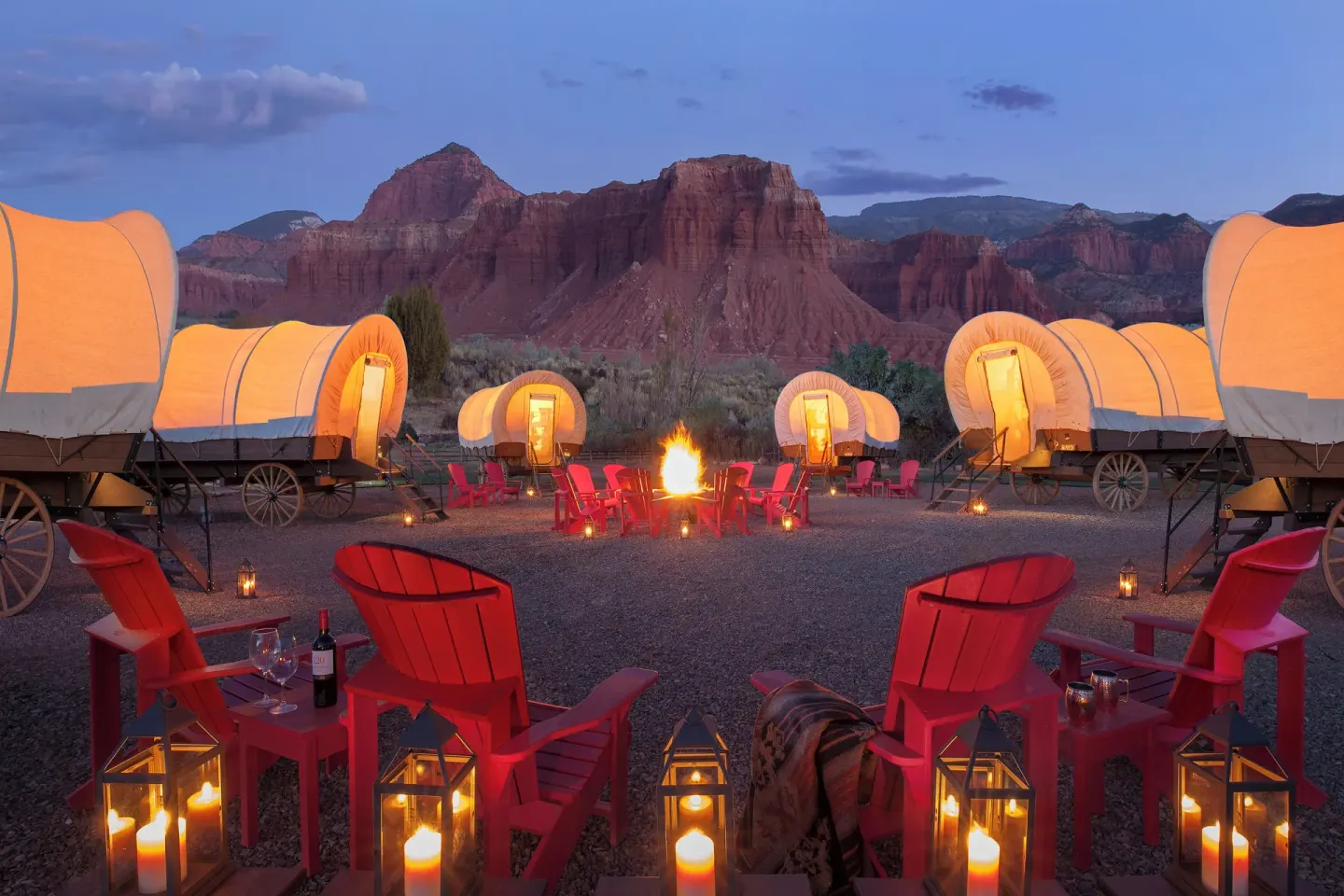
Some on-site lodging types (teepees and Conestoga wagons) are available only roughly mid-May through October due to weather; if you plan to stay in those unique units, confirm availability and plan your arrival logistics accordingly.
- Spring and fall: favorable driving conditions and milder temperatures.
- Summer: very hot in daytime and summer monsoon storms possible; drive with caution.
- Winter: fewer services and possible winter weather impacts on roads — check road reports.
| Season | Travel note |
|---|---|
| Spring & Fall | Recommended for hiking and stable roads |
| Summer | High temperatures and monsoon storm risk |
| Winter | Potential icy or snowy conditions; reduced services |